Understanding the White House's Methodology for Reciprocal Tariffs
How the White House Calculated Reciprocal Tariffs
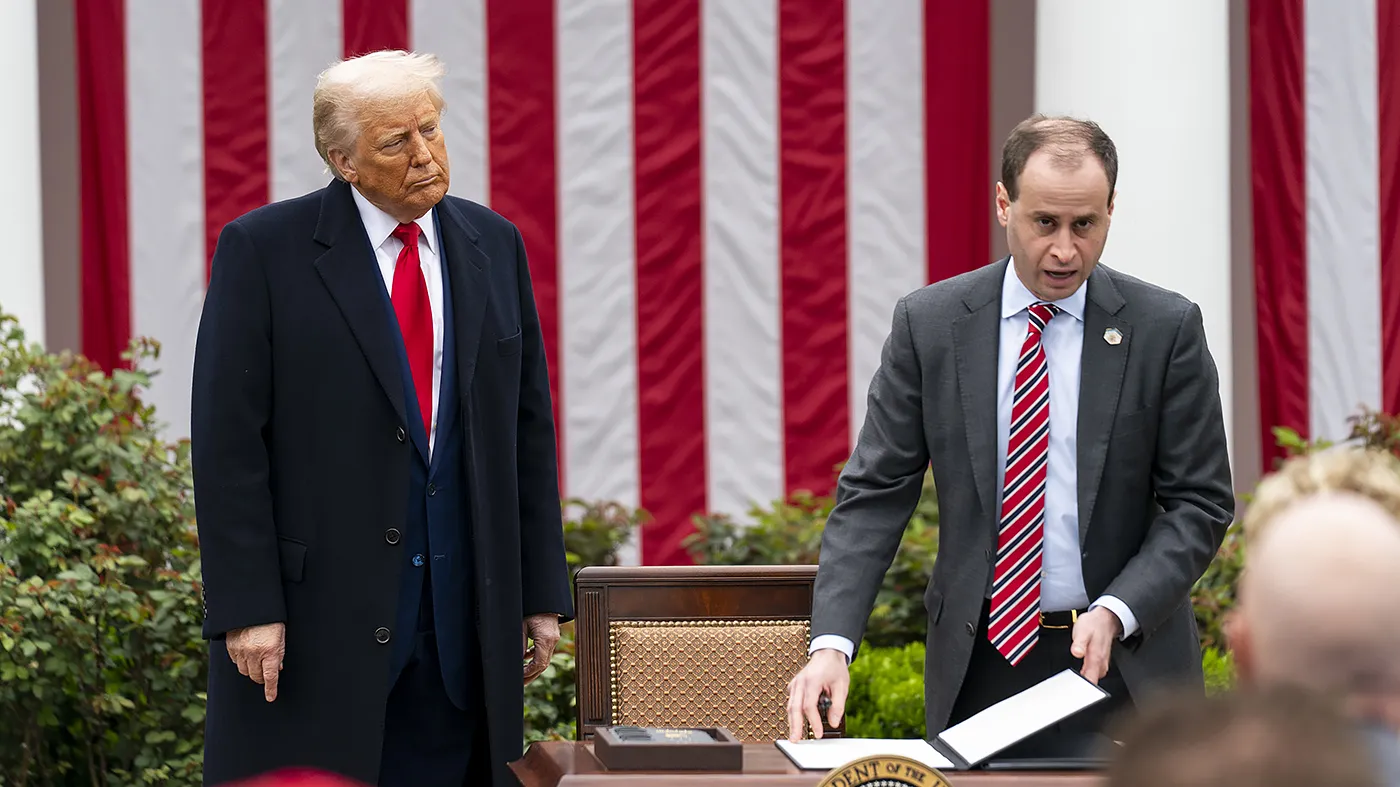
President Trump triumphantly held up a poster board in the Rose Garden on Wednesday showing the reciprocal tariffs he plans to impose on nearly every country in the world. But just how the White House came up with the formula to determine what percentage of tariffs to impose and where has left foreign leaders, financial analysts, and consumers scratching their heads.
Administration officials insist that trade deficits took a central role in determining the rates. In rolling out the tariffs, officials said the rate for each country would also be calculated by factors including tariffs imposed on U.S. goods and non-trade barriers like currency manipulation and intellectual property theft.
A summary by the U.S. Trade Representative’s (USTR) office claims to demonstrate how it reached the final numbers imposed on other countries, primarily relying on trade deficits. “Reciprocal tariffs are calculated as the tariff rate necessary to balance bilateral trade deficits,” the USTR summary stated. This calculation implies that persistent trade deficits result from a mix of tariff and non-tariff factors.
When examining tariffs imposed on China, which experienced the highest rate of retaliation, the USTR calculates a figure based on the existing balance. For instance, dividing the United States's 2024 deficit with China by the volume of imports gives a resultant figure shown at 67 percent, yielding a reciprocal tariff of 34 percent. However, compounding this rate with an existing 20 percent tariff leads to a total of 54 percent on goods from China.
Similar ratios apply to other countries like Japan and Thailand, where the trade deficit forms the backbone of the tariff calculation. Reports suggest this approach affects at least 71 of the 184 nations hit with reciprocal tariffs.
Dissecting the Administration's Approach
- Commerce Secretary Howard Lutnick highlighted that the rates were determined through decades of economic analysis.
- Former Treasury Secretary Steven Mnuchin emphasized the need to view these tallies as negotiation tools rather than mere calculations.
- Experts are divided on the Trump administration’s interpretations of trade relationships, as the trade deficits reflect American purchasing power and demand.
Final Thoughts on Tariff Calculations
As the debate continues, clarity on the administration's methodology remains elusive. Understanding the mathematical foundation behind these tariff rates is crucial as the U.S. navigates its global trade relations.
This article was prepared using information from open sources in accordance with the principles of Ethical Policy. The editorial team is not responsible for absolute accuracy, as it relies on data from the sources referenced.