China Vanke and Harvey Nichols Drive Hong Kong Stocks Amid US-China Trade War
China Vanke and Harvey Nichols Affect Hong Kong Stocks
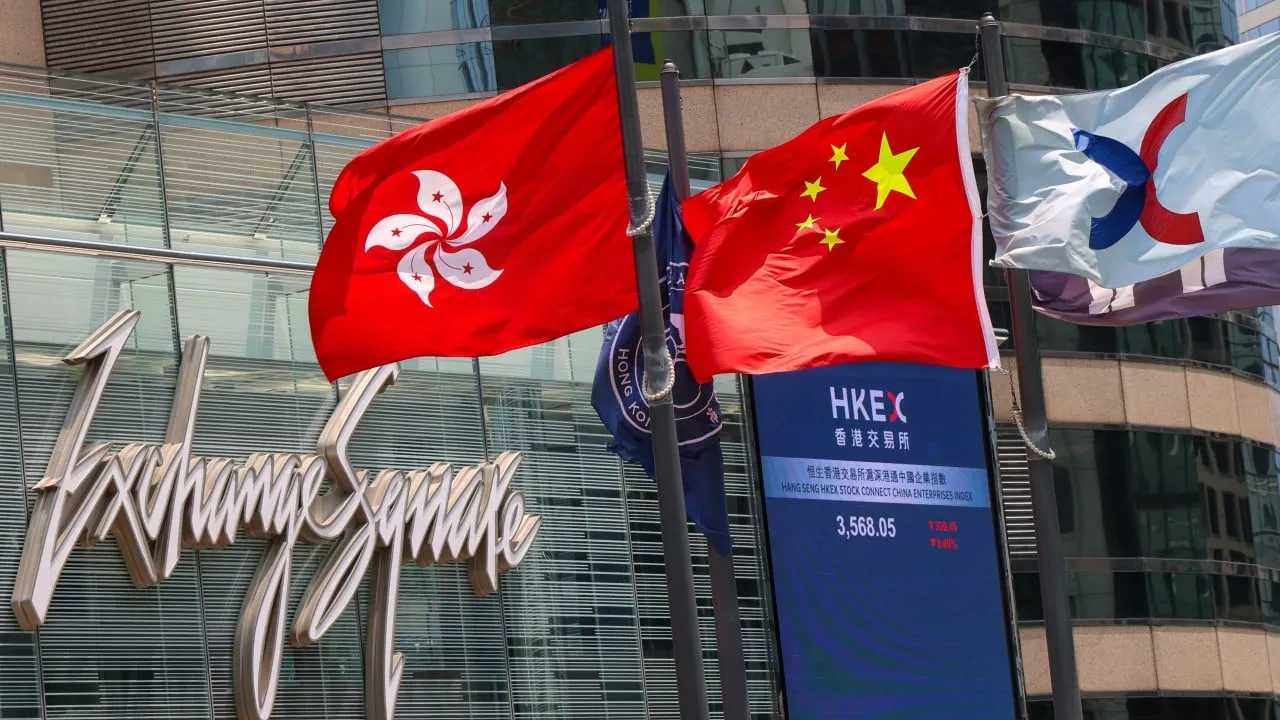
Hong Kong stocks fell on Wednesday after an official report showed manufacturing in China contracted in April amid the tariff conflict with the US. The Hang Seng Index dropped 0.6 per cent to 21,868.38 at 9.55am local time, while the Hang Seng Tech Index eased 0.3 per cent. On the mainland, the CSI 300 Index eased 0.1 per cent and the Shanghai Composite Index lost 0.2 per cent. Onshore markets will be closed for the Labour Day holiday for three days from Thursday to Monday.
China Merchants Bank slumped 5.2 per cent to HK$42.15, ICBC dropped 4.2 per cent to HK$5.25, and Bank of China declined 2.3 per cent to HK$4.26 following poor earnings results. However, AIA gained 5 per cent to HK$57.30 after reporting stellar new business growth in Hong Kong and mainland China.
Purchasing Managers' Index Falls
The purchasing managers’ index, a survey of sentiment among Chinese factory owners, fell to 49 in April, indicating contraction. A reading below 50 signifies contraction, as noted by the National Bureau of Statistics.
Nomura economists note, “We believe growth peaked in the first quarter and is set to fall significantly in the second quarter, due mainly to payback effects from the front-loading of exports ahead of the mammoth US ‘reciprocal’ tariffs.”
Double Whammy for China’s Economy
“China’s economy faces a double whammy: the ongoing property fallout internally and the unprecedented US-China trade war externally,” they added. Meanwhile, China Vanke fell 2.2 per cent to HK$5.32 after reporting a bigger first-quarter loss.
Hong Kong Exchanges and Clearing rose 0.4 per cent to HK$336.80 ahead of its quarterly earnings on Wednesday. Dickson Concepts surged 43.7 per cent to HK$6.87 after trading resumed following the founder’s plan to take the company private.
Regional Market Movements
Elsewhere in Asia-Pacific, Japan’s Nikkei 225 gained 0.1 per cent, Australia’s S&P/ASX 200 rose 0.2 per cent, and South Korea’s Kospi declined 0.6 per cent.
This article was prepared using information from open sources in accordance with the principles of Ethical Policy. The editorial team is not responsible for absolute accuracy, as it relies on data from the sources referenced.