US Investments in Argentina May Depend on Upcoming Election Results
US Investments in Argentina May Depend on Upcoming Election Results
Treasury Secretary Scott Bessent suggested that planned investments in Argentina from major U.S. companies could hinge on the results of the country's upcoming legislative elections. In a recent social media post, Bessent listed various initiatives the U.S. is pursuing to support the Argentine economy and its financial sector.
These initiatives include a commitment to purchase Argentina's U.S. bonds and an unspecified amount of government debt, alongside the introduction of a currency swap line.
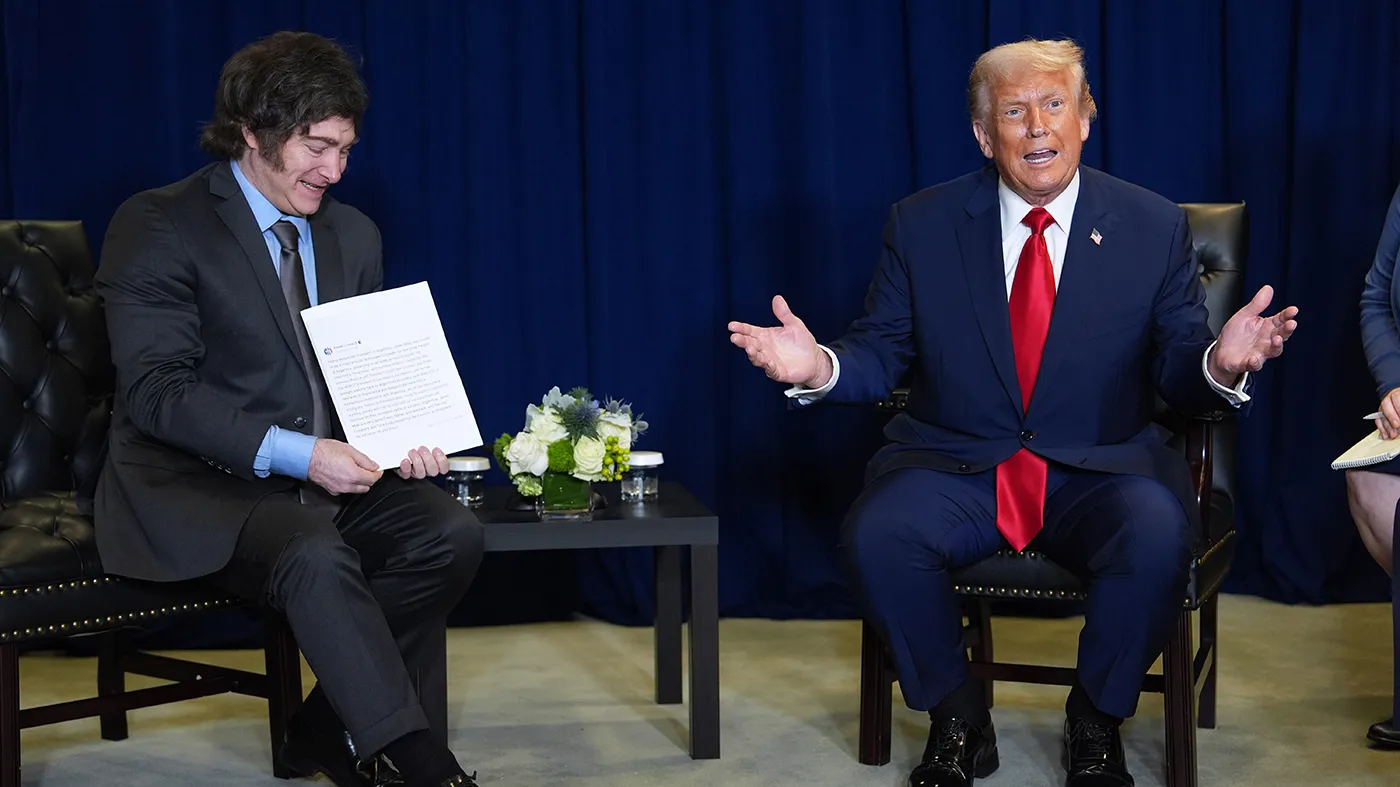
President Trump and Bessent met with Argentine President Javier Milei on the sidelines of the U.N. General Assembly, aiming to assist Argentina amid a financial crisis. Trump endorsed Milei after agreeing to extend a critical financial lifeline.
“Argentina has the tools to defeat speculators who aim to disrupt its markets for political gain,” Bessent noted, citing traders aiming to capitalize on the sharp rise in Argentine currency value.
Bessent expressed concerns that U.S. private sector support would largely depend on Milei’s party gaining more legislative power after the October 26 election. He stated, “I have also been in touch with numerous U.S. companies who are poised to make significant foreign direct investments in Argentina across various sectors if the election outcome is favorable.”
Trump and Milei, both who rose to power with promises to reduce inflation and cut government spending, share a mutual vision regarding economic policies.
Milei, who appeared at the Conservative Political Action Conference (CPAC) with notable figures, committed to tackling Argentina's inflation through spending cuts and governmental reforms. However, experts indicate that achieving his objectives requires enhanced legislative authority. His party has, however, witnessed declining support, exacerbated by the ongoing financial crisis.
This article was prepared using information from open sources in accordance with the principles of Ethical Policy. The editorial team is not responsible for absolute accuracy, as it relies on data from the sources referenced.