Medicine Research: Understanding Jet Lag Adjustment Through Health Science
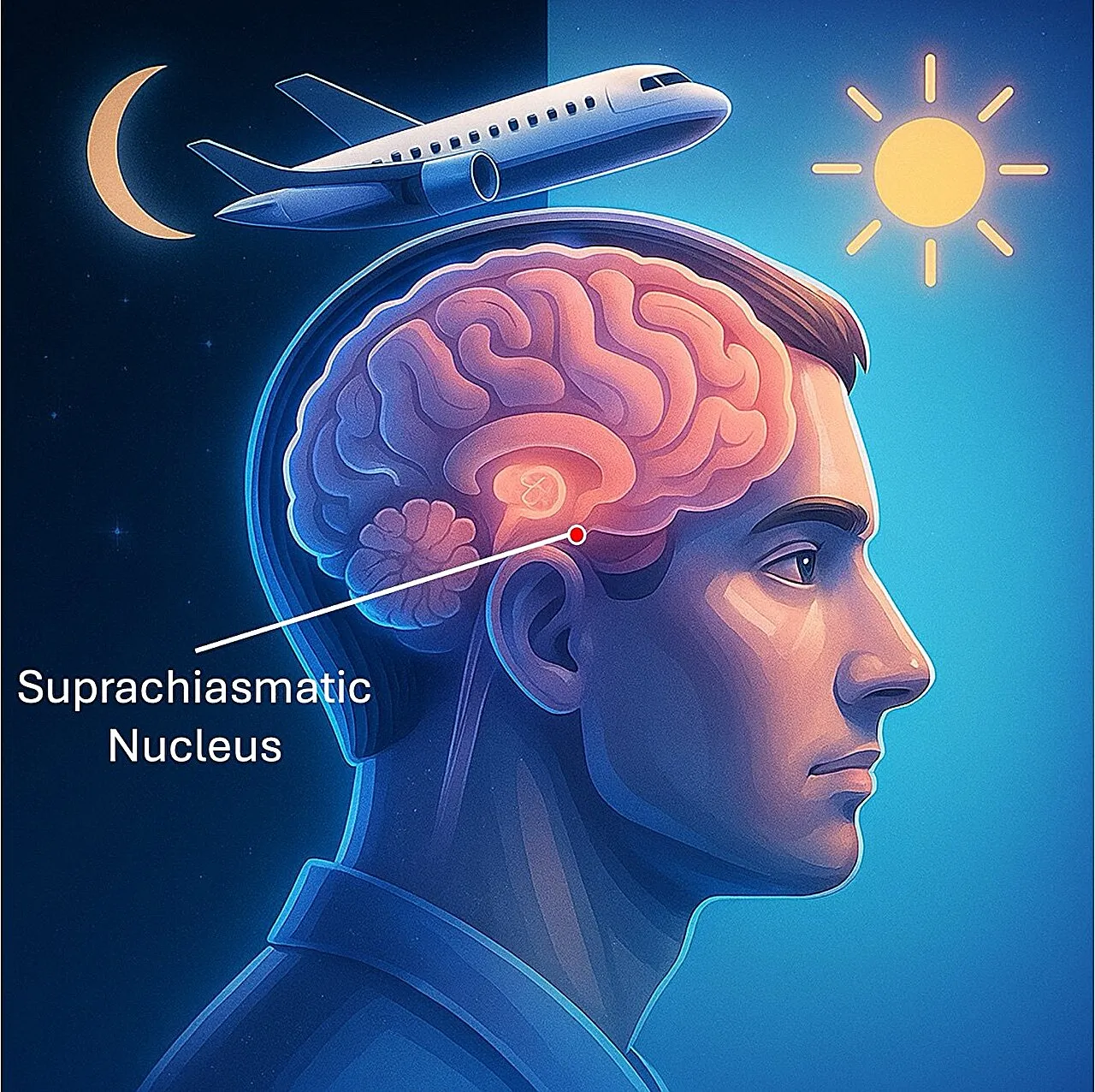
Medicine Research: New Insights into Jet Lag Adjustment
Recent health research demonstrates the surprising ways our bodies adjust to jet lag through advanced techniques in medicine science. Utilizing deep brain imaging in awake mice, researchers have discovered that light plays a crucial role in resetting our circadian clock. This process involves a network of neurons within the SCN that react dynamically to environmental changes.
The Role of Light in Circadian Rhythms
- Light stimulation significantly impacts the body's internal clock.
- Complex interactions between neurons facilitate effective adjustment.
- Health implications of these findings extend to various aspects of wellness.
Implications for Health Science
These discoveries in health research news not only contribute to our understanding of jet lag but also inform broader public health initiatives. Further investigation may lead to innovative strategies for managing sleep disorders and optimizing overall health.
Disclaimer: The information provided on this site is for informational purposes only and is not intended as medical advice. We are not responsible for any actions taken based on the content of this site. Always consult a qualified healthcare provider for medical advice, diagnosis, and treatment. We source our news from reputable sources and provide links to the original articles. We do not endorse or assume responsibility for the accuracy of the information contained in external sources.
This article was prepared using information from open sources in accordance with the principles of Ethical Policy. The editorial team is not responsible for absolute accuracy, as it relies on data from the sources referenced.