Dark Matter Discovery Efforts Intensify with LUX-ZEPLIN's Latest Signal
Dark Matter Research Takes a Leap Forward
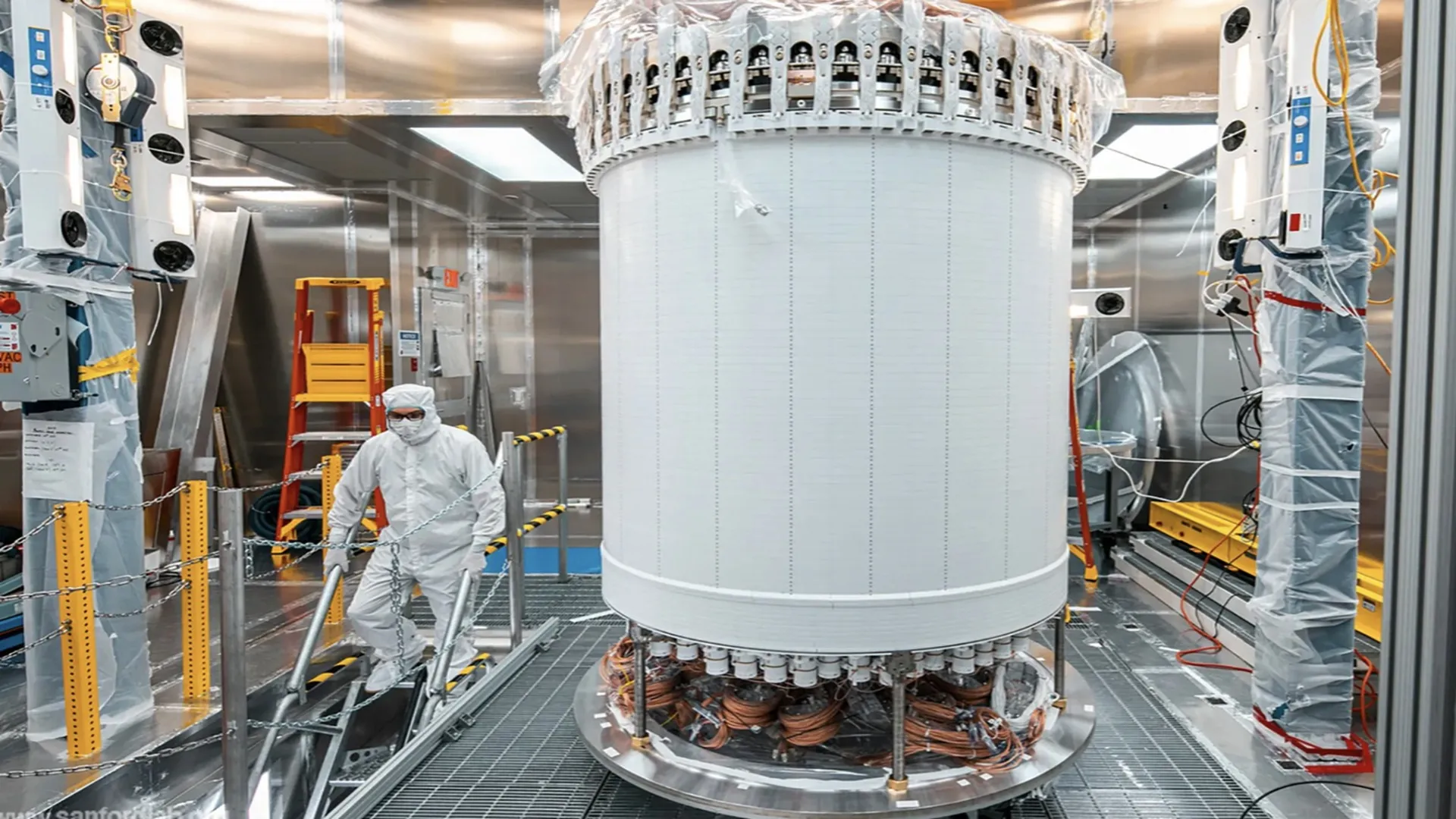
Dark matter research is at a pivotal moment with the recent detection of a rare particle event by the LUX-ZEPLIN (LZ) experiment. This dark matter detector, located nearly a mile underground at the Sanford Underground Research Facility, recorded a single particle event that could potentially indicate dark matter's existence. The finding is particularly compelling as it appeared in a region where background signals from normal matter are minimal.
The Significance of the Detected Event
- The detected signal has a significance of 2.6 sigma, which is below the 5-sigma threshold typically required to affirm a discovery in particle physics.
- Researchers estimate a 0.5% chance that the signal could be due to known background processes.
- This event adds to the ongoing quest for WIMPs, or weakly interacting massive particles, seen as potential dark matter candidates.
Insights from the LZ Experiment Team
“We’re very intrigued to see this event in the data, in the region where we expect dark matter to show up,” stated Rick Gaitskell, a professor at Brown University and spokesperson for LZ. “We don’t want to get ahead of ourselves, but this is definitely a noteworthy signal.” Furthermore, Luiz de Viveiros, a physicist at Penn State, expressed enthusiasm over the potential of this outcome as a glimpse into dark matter.
The Road Ahead for Dark Matter Research
LUX-ZEPLIN aims to deepen our understanding of dark matter interactions with known matter. With LZ's team of 250 international experts, efforts continue to discern the nature of this intriguing signal, suggesting a mass possibly exceeding 200 GeV/c² for the WIMPs.
This article was prepared using information from open sources in accordance with the principles of Ethical Policy. The editorial team is not responsible for absolute accuracy, as it relies on data from the sources referenced.