Suni Williams NASA Retirement: Celebrating a Pioneering Career in Space
Suni Williams NASA Retirement Details
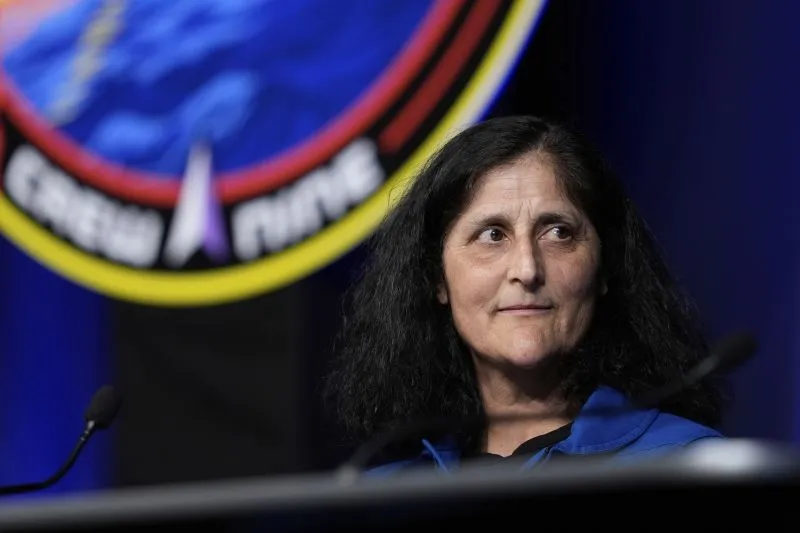
Longtime NASA astronaut Suni Williams announced her retirement Tuesday, officially making the unexpectedly long Boeing Starliner test flight her final foray to orbit as a member of the astronaut corps.
Williams, who has set multiple spaceflight records since joining the agency in 1998, expressed her love for space: “Anyone who knows me knows that space is my absolute favorite place to be.” During her career, she flew to the International Space Station (ISS) three times and set numerous benchmarks, including being the first person to complete a triathlon in space in 2012.
A Career Full of Achievements
- Logged 608 days in space, the second-most by a NASA astronaut.
- Accrued 62 hours free-floating in space across nine different spacewalks.
- Became the first person to run a marathon in space in 2007.
Williams' impressive contributions have garnered international attention, especially during her recent test flight mission with fellow astronaut Butch Wilmore. The duo expected a brief stay at the ISS but ended up staying for more than nine months due to technical issues with the Starliner capsule. Williams remarked on her time in space, highlighting the science and engineering marvels: “The International Space Station, the people, the engineering, and the science are truly awe-inspiring.”
Future of Space Exploration
With Williams' departure from the astronaut corps, NASA is at a pivotal moment as it prepares for future missions. Although the next Boeing Starliner mission will be uncrewed due to safety concerns, Williams believes in the spacecraft's capabilities: “The spacecraft is really capable… it is a great spacecraft, and it has a lot of capability that other spacecraft don’t have.”
Significance of Suni Williams' Retirement
Her retirement not only marks a significant transition in her life but also serves as an inspiration for future generations of explorers.
This article was prepared using information from open sources in accordance with the principles of Ethical Policy. The editorial team is not responsible for absolute accuracy, as it relies on data from the sources referenced.