Filibuster Tensions Rise as House Approves SAVE America Act
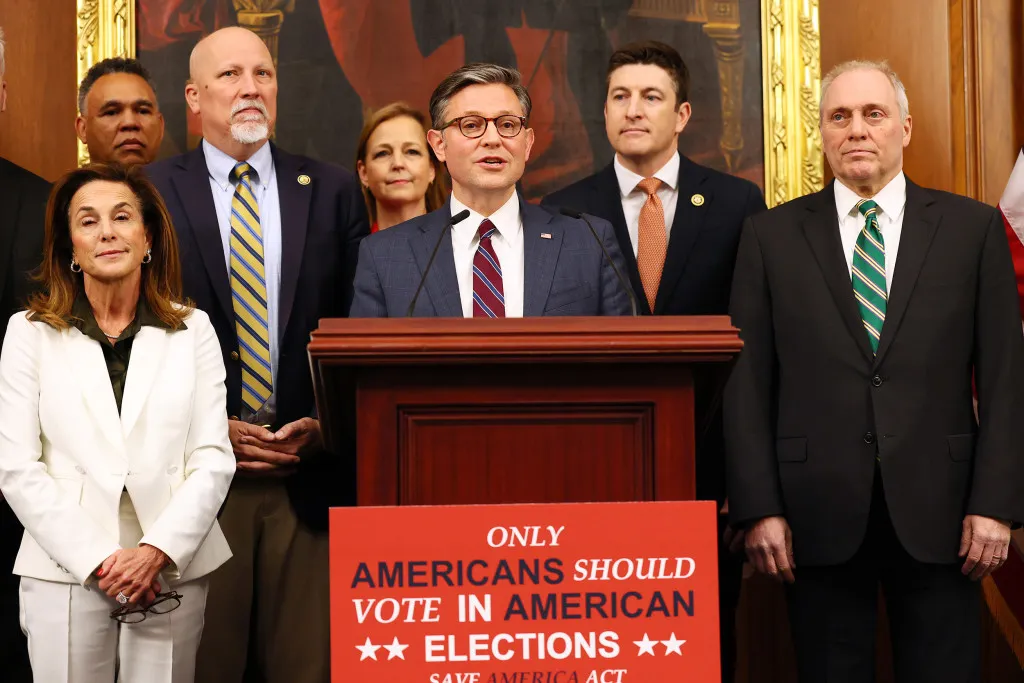
Filibuster Tensions Surround the SAVE America Act
In a dramatic vote, the Republican-led House approved the SAVE America Act, a sweeping election reform fueled by former President Trump's ambitions. The margin stood at 218-213, with unanimous Republican support contrasted by nearly unanimous Democrat opposition. The act necessitates states to acquire documentary proof of citizenship from voters, raising alarms among critics about potential disenfranchisement.
Political Reactions and Challenges Ahead
Speaker Mike Johnson emphasized the necessity of voter ID, stating, “Americans need an ID to drive or open a bank account, so why would voting be different?” Conversely, House Minority Leader Hakeem Jeffries lambasted the bill as a voter suppression tactic, echoing sentiments that this effort is a diversion from essential political issues.
- Legislation mandates photo ID for in-person voting.
- Mail-in ballot rules require ID submission.
- Supporters argue it's about election integrity.
Filibuster Implications in the Senate
As the SAVE America Act transitions to the Senate, it confronts the formidable filibuster, a procedural hurdle that could thwart its passage. Some Senate Republicans exhibit reservations, recalling prior commitments to resist federal intervention in state election matters.
With Democratic leaders decrying the proposal as reminiscent of Jim Crow laws, the legislative journey ahead appears complex. As Senate Majority Leader John Thune indicates ongoing discussions, the ultimate fate of the bill hangs in the balance amidst debates on whether to maintain the filibuster.
This article was prepared using information from open sources in accordance with the principles of Ethical Policy. The editorial team is not responsible for absolute accuracy, as it relies on data from the sources referenced.